 Owen
Owen
Your website might look impressive, load quickly and contain valuable information about your business. But how easily can search engines and AI access and fetch that information?
AI search has become a central part of how people discover. We’ve previously discussed how AI agents are becoming another audience for websites and how AI is changing the way people find information. But there’s another important consideration (and it’s not whether we should call it SEO, GEO, AEO, AIO, SXO, LLMO or SI Search).
Your website can look perfectly functional to visitors while still presenting technical challenges to the systems trying to access its content.
A website should look good, work well and be easy for people to use. But its content also needs to be discoverable by search engines. Understanding how websites are crawled, rendered and indexed helps identify where web development and technical SEO can improve search visibility.
- Web Development for AI Search
- What Makes a Good Website Structure?
- Build a Website That Is Easy to Navigate
- Help Search Engines Understand Your Content
- Semantic HTML Supports Accessibility
- Internal Linking Supports Content Discovery
- Does Structured Data Help AI?
- How Search Engines and AI Crawlers Discover Content
- Crawler Accessibility
- How Does Google Identify Relevant Passages?
- Can Search Engines Read JavaScript?
- Measure and Improve Performance
Web Development for AI Search
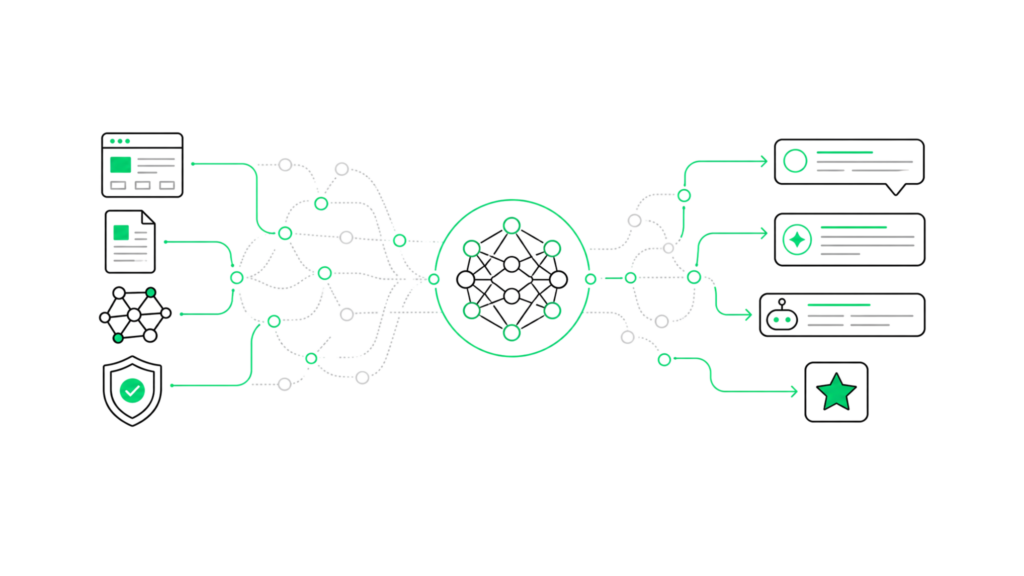
Search engines have always relied on technical processes to discover, crawl and index webpages. AI search introduces new ways for people to explore information and receive answers to complex questions. For example, Google’s AI Overviews and AI Mode can use a technique called query fan-out.
Rather than relying on one search, these systems may perform several related searches to gather information about different aspects of a user’s question.
Imagine someone researching a software platform for their business.
Their initial question might be:
Which software platform would best support our operations?
To help answer this, an AI might explore related questions about implementation, integrations, pricing and regulatory requirements. Relevant details could exist across several pages of a company’s website. This makes clear website structure important, helping search engines discover relevant information across related pages.
A well-developed website makes important content accessible and connects related information in a logical way.
Google confirms that established SEO practices remain relevant to AI Overviews and AI Mode. These include crawlability, internal linking and making important information available as text.
What Makes a Good Website Structure?
A well-organised website should include:
- Clear navigation that reflects the services offered.
- Dedicated pages for distinct products or services.
- Descriptive headings that communicate each section’s purpose.
- Relevant internal links between related information.
- Consistent URLs and a logical page hierarchy.
Build a Website That Is Easy to Navigate
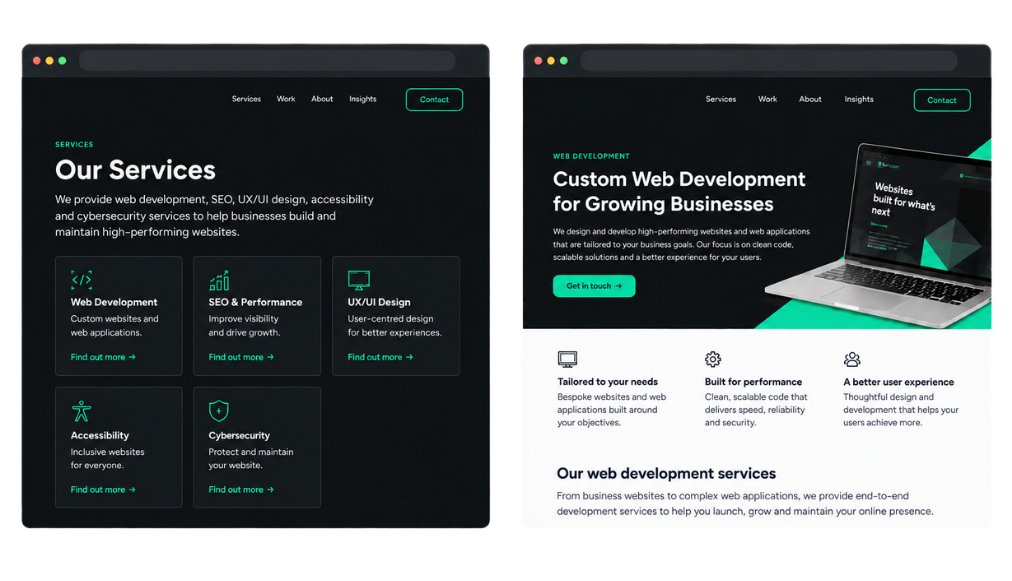
Website architecture determines how pages are organised and connected. A logical structure makes it easier for your visitors to explore your services and find answers. It also helps search engines discover content and understand relationships between pages.
Your website might feature several services. Covering them all briefly on one page might not give visitors enough information to make a decision. This is where dedicated service pages give you more space to explain what you offer and demonstrate your expertise.
Supporting articles can then answer related questions and provide additional context.
Help Search Engines Understand Your Content
Making information accessible is important, but the content also needs to be clear. Your website should explain what you offer using language that accurately describes your services and expertise.
This includes providing useful details about who your services are designed for and how they address customer needs. Visitors may also want to understand how a product works, which systems it integrates with and how well it meets their business requirements. Providing clear answers makes the website more useful to potential customers. It also gives search systems more relevant information to work with.
Headings help organise information into recognisable sections. Descriptive page titles communicate the main subject. Relevant internal links connect supporting information. Together, these elements create a clearer content structure. This is particularly important when businesses cover complex products or specialist services.
Instead of trying to include every detail on one page, related subjects can be organised into dedicated sections or supporting resources.
The result is content that’s easier to navigate and maintain.
Semantic HTML Supports Accessibility
Semantic HTML gives webpage elements a defined purpose. This helps browsers and assistive technologies interpret content while providing search engines with clearer structural information. It gives elements a clear purpose, making content easier to navigate and interact with. Using semantic HTML correctly also helps assistive technologies interpret webpages.
Here are some examples of how semantic HTML supports website structure and usability.
How do headings help structure website content?
Heading elements (H1–H6) establish a clear content hierarchy, helping users identify the main topics and supporting information.
How do descriptive links improve accessibility?
Meaningful link text helps users and assistive technologies understand where a link leads without relying on surrounding content.
Why should website forms use labels?
Form labels explain what information users need to enter, making forms easier to understand and complete. These practices can also provide useful structural information to automated systems interacting with a website.
The Web Content Accessibility Guidelines (WCAG) 2.2 provide an established framework for improving accessibility.
Internal Linking Supports Content Discovery
Internal links connect pages that cover related subjects.
For example, a web development service page might link to supporting articles about website performance, accessibility and technical SEO.
These connections help visitors explore relevant information without having to return to the main navigation. Internal links also help search engines discover related pages and understand how different topics connect across a website.
However, effective website architecture isn’t about creating a page for every possible search query.
The goal is to organise content according to genuine user needs.
These principles support both user experience and technical SEO.
Does Structured Data Help AI?
Structured data provides additional context about webpage content through standardised markup.
For example, relevant schema can help identify an organisation, describe a product or clarify specific properties of an article. During a recent Google Search Central Live event in Barcelona, structured data was highlighted as a useful way to reduce ambiguity. However, it should only be used where relevant and must accurately represent the page’s content.
Google has confirmed that no special schema markup is required for AI Overviews or AI Mode. Structured data should support clear, useful content rather than replace it.
How Search Engines and AI Crawlers Discover Content
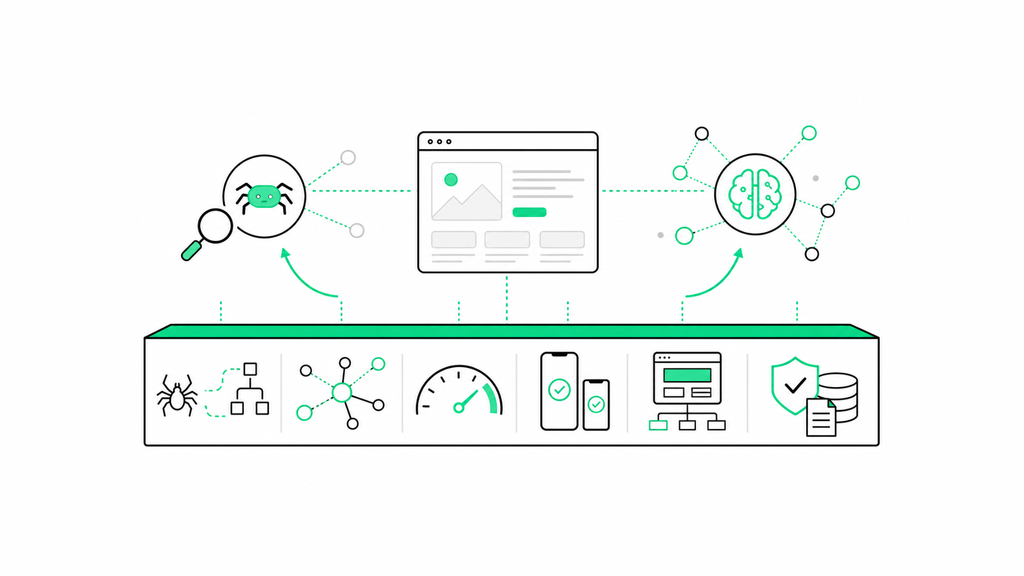
Search engines need to discover and retrieve webpage content before they can process it for indexing. Technical configurations can sometimes prevent this from happening.
For example, websites may contain pages that search engines cannot crawl because of access restrictions, server errors or incorrectly configured robots directives.
Other issues, such as unnecessary redirects and excessive URL variations, can make content discovery less efficient. These are established technical SEO considerations, but they remain relevant as AI search becomes more widely used.
Crawler Accessibility
Crawlability describes how effectively search engine crawlers can discover and retrieve pages from your website. If important pages cannot be crawled, their visibility in search may be affected.
Common technical issues include:
- Pages unintentionally blocked through robots.txt.
- Incorrect indexing directives.
- Broken internal links.
- Excessive redirect chains.
- Server errors that prevent content retrieval.
- Security restrictions that block legitimate crawlers.
These checks can reveal restrictions affecting legitimate crawlers. Different AI services use different retrieval methods, so reviewing robots.txt rules, firewall settings and server responses can help identify potential issues.
How Does Google Identify Relevant Passages?
Imagine a business has a detailed software development page covering several services. One section explains how its software integrates with existing systems.
Someone searching for information about software integrations could find that page because Google can identify the relevant section, even when the overall page covers a broader topic.
This is known as passage ranking. Google indexes the webpage as a whole, but its systems can assess individual passages when determining how relevant the page is to a search.
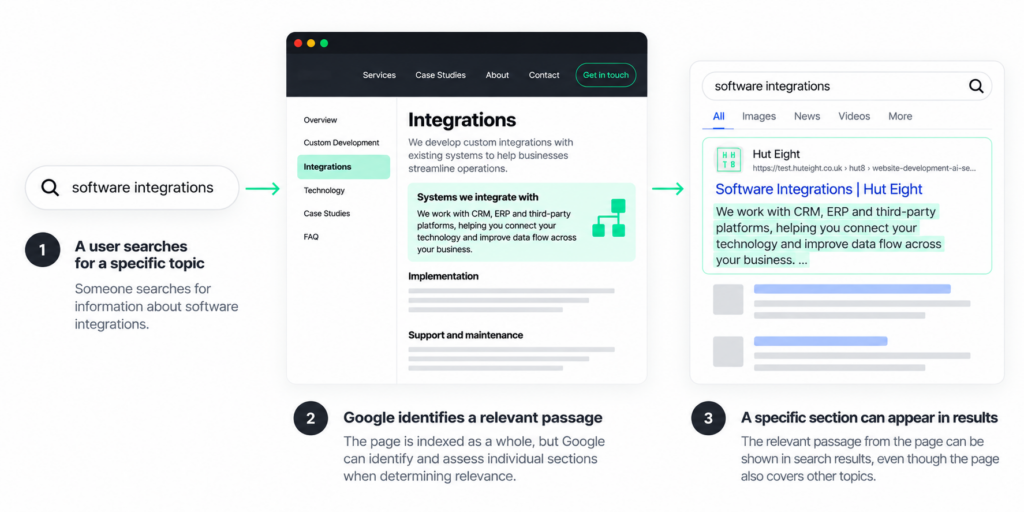
Clear headings and well-organised content help visitors find the information they need. They also give search engines useful context about each section.
Can Search Engines Read JavaScript?
JavaScript powers many features of modern websites, including interactive content and dynamic page elements. Modern JavaScript frameworks can create sophisticated and interactive user experiences. However, depending on how a website is implemented, important information may not be available in the initial HTML response.
Google can render JavaScript through its web rendering service, but this involves additional processing. Other automated systems may use different approaches to retrieving web content.
The important distinction is between understanding JavaScript code and executing that code to display content.
An AI system may be capable of interpreting JavaScript code without executing it to render a webpage. This means important website information should not depend entirely on client-side JavaScript to become accessible.
Development approaches such as server-side rendering can make essential content available in the initial HTML response, reducing reliance on additional processing. This doesn’t mean JavaScript is bad for SEO. It means developers need to consider how important information is delivered.
Measure and Improve Performance
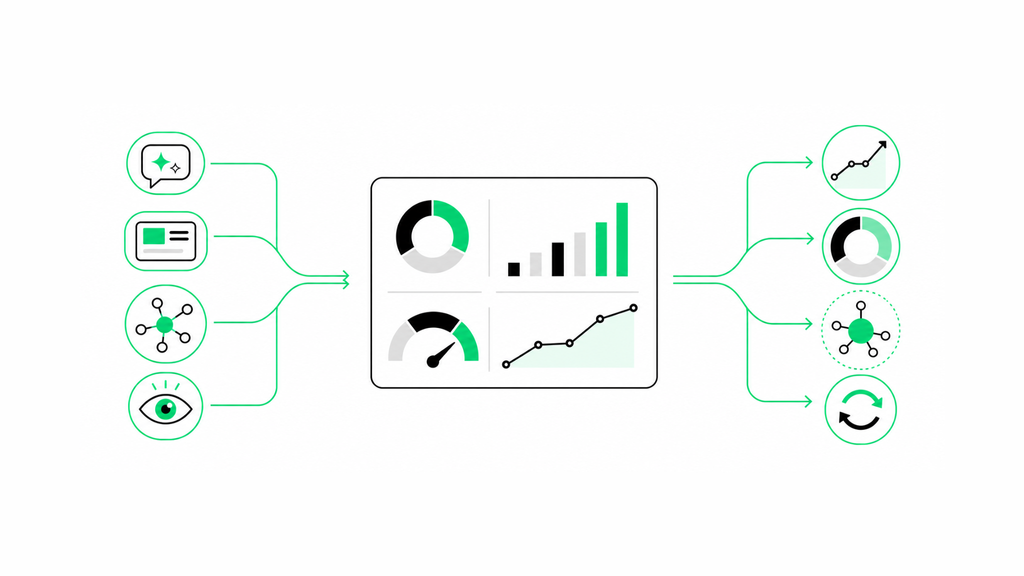
Website performance goes beyond loading speed. Reviewing search visibility, visitor behaviour and technical performance helps identify where improvements are needed.
Assessing your website’s AI agent readiness involves reviewing how automated agents interpret and interact with its interface. Google’s Lighthouse Agentic Browsing audit can help assess elements of a website’s readiness for automated interactions. These checks are separate from Google’s requirements for appearing in AI search results.
A website also needs to provide a reliable experience once someone arrives. Slow loading times, excessive JavaScript and inefficient resources can affect usability and responsiveness. The most useful approach would combine technical SEO diagnostics, website performance monitoring and AI visibility analysis. The idea is to get a clearer understanding of how the website performs and where improvements may be needed.
Google’s Core Web Vitals help assess loading speed, responsiveness and visual stability. The tool provides a clearer view of website performance and identifies where improvements are needed.
Developers should review:
- Image and media optimisation.
- JavaScript and unnecessary page resources.
- Caching and hosting configurations.
- Loading performance and responsiveness.
- Core Web Vitals.
Google’s Core Web Vitals measure loading performance, responsiveness and visual stability. These metrics help identify aspects of the user experience that may need improvement.
What Can Businesses Measure Today?
AI-powered search introduces additional considerations, particularly around content discovery, AI referrals and brand visibility. There are several tools that can help businesses identify these opportunities.
How can Google Search Console help?
Google Search Console provides information about search impressions, clicks and indexing.
Its Page Indexing report and URL Inspection tool help identify technical issues affecting content discovery. The Performance report provides search visibility data, although it does not separately report every AI search interaction.
Can Google Analytics 4 track AI search traffic?
GA4 can identify referral visits from AI assistants when referral information is available. However, not every interaction with an AI assistant results in a website visit, so referral traffic only provides part of the picture.
What can server logs and CDN analytics tell us?
Server logs and CDN analytics can reveal automated requests and crawler activity. This helps website owners understand which systems are accessing their content, although crawler activity alone does not confirm inclusion in AI-generated answers.
How can businesses monitor AI search?
AI visibility tools can help track brand mentions and citations across selected prompts and platforms. Because AI-generated responses can vary, results should be monitored over time rather than judged through individual searches.
Preparing a website for AI search doesn’t necessarily mean rebuilding it. In many cases, businesses can improve their existing website by reviewing its architecture, technical accessibility and content structure.
Regular website maintenance helps businesses address technical issues, update content and improve functionality as their needs change.
The right development approach depends on the website’s complexity and the level of ongoing support required. Some businesses may benefit from a one-off development project, while others may need a more flexible or managed website service. The right approach should support a reliable user experience while making the website easier to maintain and improve.
A well-planned website should support:
- Content growth: Adding new pages and services without unnecessary complexity.
- Technical maintenance: Keeping software, security and website functionality up to date.
- Performance monitoring: Identifying technical issues before they affect the user experience.
- Future development: Introducing improvements as business needs and technology change.
Our web development and SEO teams work together to identify improvements that support website performance and search visibility. If you’re reviewing how your website supports traditional search and AI search, speak to the Hut Eight team about ways to strengthen its content and technical foundations.
Explore our related articles to learn more about how AI is changing search and what it means for your website. If you’re not sure where to begin, our free whitepaper “The Evolution of Search” is a great starting point.